A vacant office full of old desks can delay a new lease. A tenant turnover can leave a property manager with abandoned furniture, bagged trash, and no time to sort it all. Commercial junk removal services give businesses a practical way to clear space without pulling employees away from the work that keeps the business moving.
For businesses across Canton, Cherokee County, and Metro Atlanta, the right removal crew does more than haul away unwanted items. They help restore usable space, support a tighter turnover schedule, and handle belongings with care. That matters whether you are clearing one storage room or preparing an entire property for its next tenant, buyer, or use.
When a Business Should Call for Junk Removal
Commercial cleanouts are often treated as a job for “sometime next week.” That works until an inspection, showing, renovation, delivery, or move-in date is suddenly close. Calling early gives you more control over the schedule and keeps a small pile from turning into a much larger project.
Professional help is especially useful when the load is too large for employees to handle safely, the items are bulky, or the property has a firm deadline. Old office furniture, retail fixtures, appliances, shelving, cubicles, mattresses, electronics, boxes, and construction debris can take up valuable room quickly.
It also makes sense to bring in a removal team when the condition of the property is uncertain. A landlord may walk into a unit after a tenant leaves and find a mix of furniture, personal property, and general debris. A business owner may be closing a location and need to separate items that can be donated from items that are no longer usable. Those jobs need a plan, not just extra hands.
Common Commercial Junk Removal Situations
Every commercial job is different, but the goal is usually the same: clear the property efficiently so the next step can happen. Realtors, property managers, small-business owners, contractors, and office administrators often call for help in a few familiar situations.
Office and Workspace Cleanouts
Office cleanouts may involve desks, chairs, filing cabinets, breakroom furniture, outdated equipment, and stored supplies that have not been touched in years. A partial cleanout can make room for a remodel or new staff. A full office clear-out may be needed after a relocation, lease change, or business closure.
Before removal begins, identify anything that must stay, including records, computer equipment, personal belongings, and items assigned to employees. Marking “keep” items or moving them to one designated area prevents mix-ups and keeps the job moving.
Tenant Turnovers and Rental Properties
Property managers and landlords do not always get a clean handoff. Left-behind couches, mattresses, clothing, kitchen items, and garage debris can slow down repairs and make it harder to show the unit. Fast removal helps the maintenance team focus on cleaning, painting, and repairs instead of hauling.
For occupied or recently vacated properties, clear communication is essential. Confirm what is authorized for removal before the crew arrives, particularly when personal belongings may still be on-site. Good documentation protects everyone and avoids removing something that was meant to remain.
Retail, Storage, and Backroom Clear-Outs
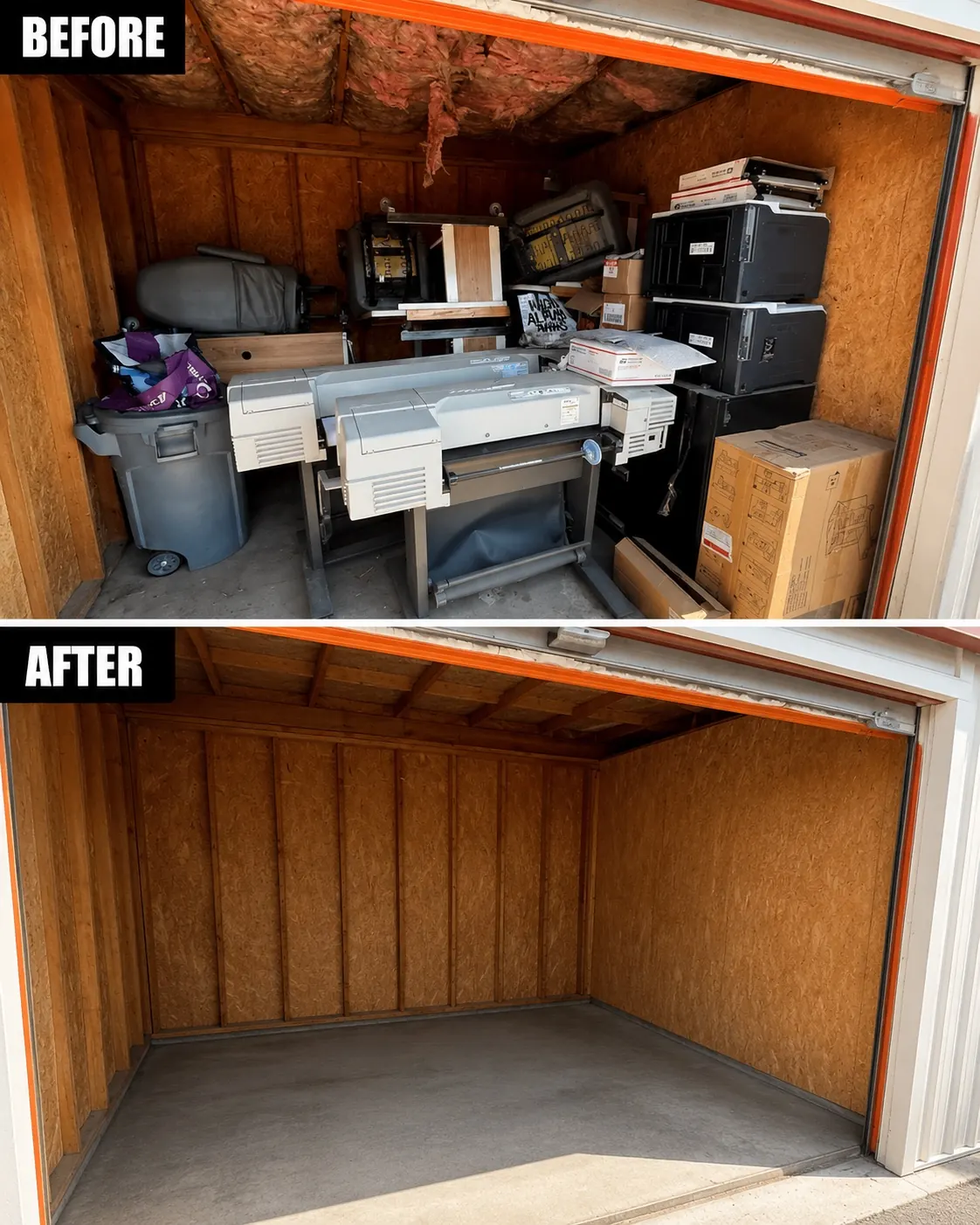
Retail spaces tend to collect displays, damaged shelving, old inventory fixtures, packaging, and unused equipment. Storage units and commercial backrooms have a similar problem: useful space disappears slowly, one box and one broken item at a time.
A cleanout can make room for current inventory, improve access for staff, and help prepare a space for a new tenant. If reusable furniture or equipment is present, a company with a donation-first approach can often identify items that deserve a second life instead of being treated as ordinary junk.
Construction and Property Cleanup
After a renovation or tenant improvement project, materials and debris can remain long after the work itself is finished. Removing non-hazardous construction debris, old fixtures, carpet, cabinets, and broken furniture helps bring the site closer to its final presentation.
This is particularly helpful before listing a commercial property or handing a completed space back to a client. The final cleanup affects how quickly people can evaluate, lease, or use the property.
What the Commercial Removal Process Should Look Like
A dependable service begins with a clear description of the job. Photos, an on-site walkthrough, or a detailed conversation can help determine the volume of material, access points, heavy items, stairs, elevators, and timing needs. This allows the removal company to send the right crew and equipment for the work.
On removal day, the crew should confirm what is going and what is staying before loading begins. For an office, that might mean clearing a conference room, storage closet, and designated cubicles while leaving active workstations untouched. For a turnover, it may mean removing all approved contents from a unit, garage, or storage area.
The crew then loads the items and sweeps up the work area. The exact timing depends on access, volume, and how much sorting is needed, but most straightforward jobs are far easier to manage when the scope is clear in advance.
What Affects the Cost of Commercial Junk Removal?
Businesses often ask for a price before they can explain every item in the space. That is understandable, but accurate estimates depend on more than the address. The amount of material is a major factor, along with the type and weight of items, loading distance, stairs or elevator access, and how much labor is required to sort and remove everything.
A single room of chairs and boxes is different from a multi-suite office with cubicles, filing cabinets, and a packed storage area. Likewise, a ground-floor retail cleanout with easy access may take less labor than a third-floor office where items must be carried through a long hallway.
The best approach is to be direct about the scope. Mention deadlines, large or unusually heavy items, restricted access, and anything that needs to stay. A clear estimate helps avoid surprises and makes it easier to schedule the work around employees, tenants, contractors, or prospective buyers.
How to Prepare Without Creating More Work
You do not need to organize every item before a commercial cleanout. In fact, spending hours bagging, lifting, or moving heavy furniture can create more work than it saves. The most useful preparation is making decisions.
Identify records, personal belongings, company equipment, and inventory that must remain. If there are items that may be donated, separate them when practical or point them out during the walkthrough. Make sure the crew has access to the building, loading area, gates, elevators, or units they need to reach.
For property managers, it also helps to confirm whether maintenance teams need certain areas cleared first. Prioritizing the kitchen, lobby, main office, or a specific unit can keep the next phase of the project on track.
Responsible Removal Is Part of Professional Service
Not everything in a commercial cleanout belongs in the same pile. Usable desks, chairs, bookcases, and other furniture may be suitable for donation when condition and local acceptance allow. Other materials can be handled through appropriate recycling channels. The goal is simple: RESCUE. RECYCLE. REMOVE.
That approach is especially valuable during office closures, estate-related property transitions, and rental turnovers, where usable items are often mixed in with things that truly need to go. It takes extra attention, but it is a more respectful way to handle property contents.
Choose a Crew That Respects Your Schedule
Commercial removal is not only about lifting and loading. It is about showing up when expected, communicating clearly, working carefully around the property, and leaving the space ready for what comes next. For a business, a late or incomplete cleanout can affect staff, tenants, vendors, and revenue.
Trash Talkers Junk Removal helps businesses, landlords, and property professionals handle office cleanouts, turnover debris, furniture removal, storage-unit cleanouts, and property cleanup throughout the local area. No job is too big or too small when the scope is clear and the timing matters.
If unwanted items are holding up your next lease, renovation, listing, or opening, get your free quote today. A quick conversation about the space, access, and deadline can turn an overwhelming cleanup into a clear next step.