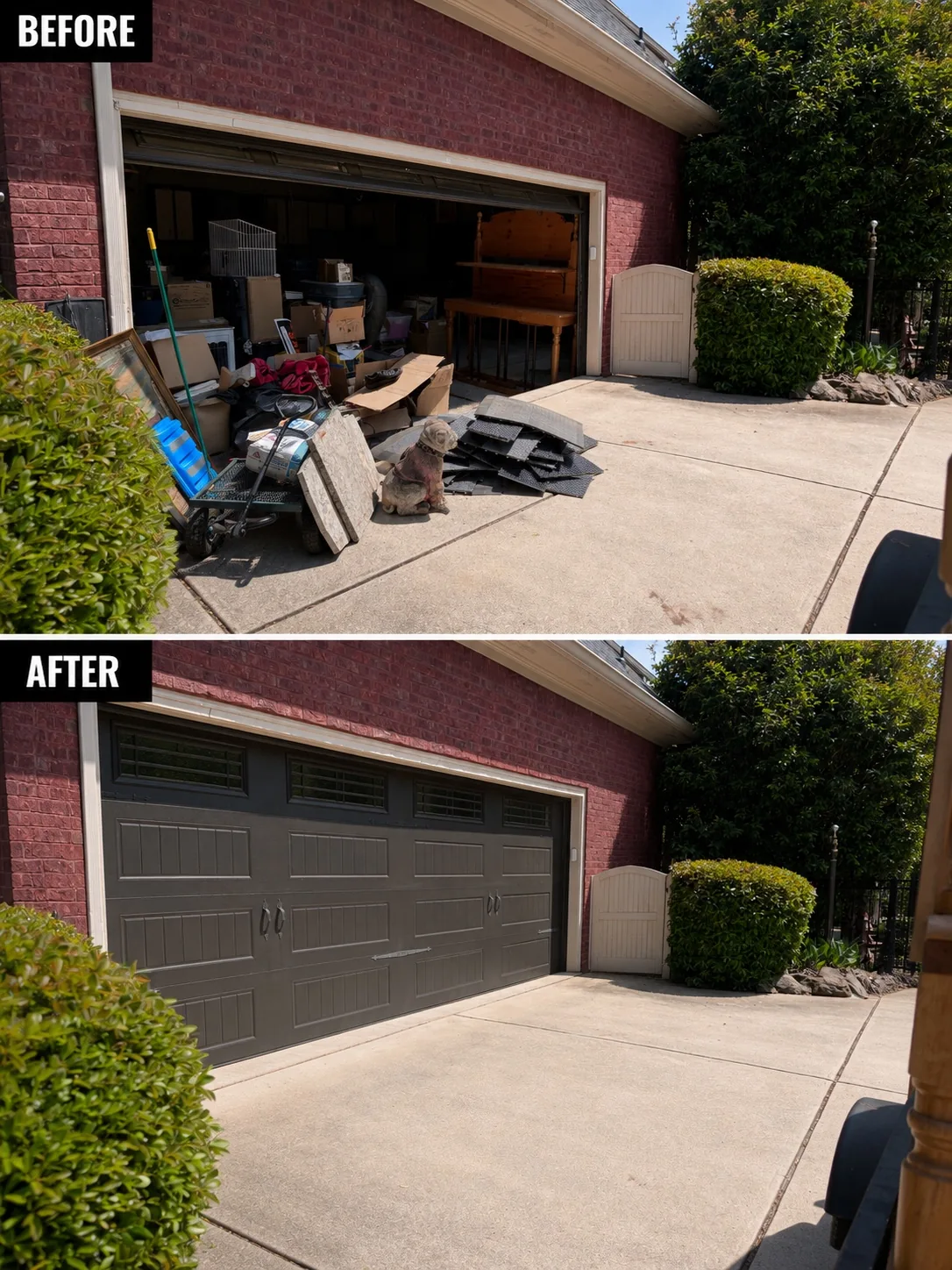
A garage can go from useful storage to an all-day excavation project faster than most homeowners expect. This garage junk removal checklist helps you make clear decisions before the piles get moved, donations get missed, or important family items accidentally leave the property.
For Canton and Cherokee County homeowners, a garage cleanout often happens before a move, a home sale, a renovation, or while sorting an inherited property. The goal is not to make every item look perfectly organized. It is to safely identify what matters, clear what does not, and get the space working again.
Start Your Garage Junk Removal Checklist With a Plan
Set a realistic outcome before you open a single box. Maybe you want room to park two cars, need a clear path to the water heater, or are preparing a property for photos and showings. A specific goal makes decisions much easier when you come across items that have been sitting untouched for years.
Choose a day when you can work without interruptions, especially if the garage contains family belongings, old paperwork, tools, or stored furniture. If the cleanout is connected to an estate, do not rush the first pass. Adult children and executors are often surprised by what turns up in garage cabinets, workbenches, and unmarked bins.
Before sorting, make room for three temporary zones: keep, donate, and remove. If floor space is limited, use one section at a time rather than pulling everything into the driveway at once. This keeps the job manageable and avoids mixing items you have already reviewed with items you have not.
Protect Valuables Before You Clear Anything
Garages are common hiding places for documents and small valuables because people store things there “just for now.” That is particularly true in homes that have been owned for decades. Check drawers, filing cabinets, toolboxes, coat pockets, containers, and the pages of old books before anything goes into a removal pile.
Look carefully for personal records, property papers, photographs, jewelry, cash, collectibles, military memorabilia, and family keepsakes. If you are cleaning out a parent’s or relative’s home, set aside a clearly marked review box for items that another family member may want to see. It is far better to make a final decision later than to recreate an argument after a cleanout is complete.
Also identify anything that belongs to someone else. Borrowed tools, stored business supplies, a neighbor’s ladder, or belongings left by a former tenant should not be treated as ordinary clutter. For Realtors, landlords, and property managers, a quick review process can prevent delays before listing or turnover.
Sort by Decision, Not by Category
Trying to organize every screw, extension cord, and paintbrush before removing junk can turn a one-day project into a month-long one. Start with the easy decisions. Broken furniture, damaged shelving, worn-out mattresses, empty boxes, and items no one has used in years can usually be separated quickly.
For items that are still usable, ask a simple question: would you feel comfortable giving this to a friend or neighbor? If the answer is yes, it may be a good candidate for donation. Usable furniture, household goods, and other items can often have a second life when they are clean and in workable condition.
Use these four questions when you hit a difficult item:
- Have we used this in the last year?
- Is it in good enough condition for someone else to use?
- Does it have a known owner or sentimental value?
- Does keeping it support the purpose of this garage?
If an item does not pass any of those tests, it is probably taking up space without serving your household. That does not mean every sentimental item must go. It means the items you keep should be intentional, contained, and easy to find.
Make a Separate Pile for Furniture and Large Items
Old couches, recliners, exercise equipment, refrigerators, workbenches, and heavy cabinets can bring a garage cleanout to a standstill. They take up the most room, are difficult to move safely, and can block access to everything behind them.
Do not force a large piece through a narrow doorway or try to carry it down steps without help. The trade-off of doing it yourself is usually not worth a damaged wall, strained back, or broken item. Professional junk removal is especially useful when large furniture is in a basement garage, tucked behind stored belongings, or part of a larger property cleanup.
Take a quick look at the condition of furniture before removal. A solid table, clean chair set, or usable dresser may be appropriate for donation. Items that are heavily damaged, wet, or no longer functional generally need to be removed. A responsible crew can sort for the best available destination rather than treating every piece the same.
Clear Access and Work Safely
Once you have made the first round of decisions, create a clear walkway from the garage to the exit. This is not just about making removal faster. It helps prevent trips over cords, loose tools, bins, and uneven stacks of boxes.
Keep heavy objects low and avoid overfilling boxes. Label anything that is staying before it gets moved to another area. If you have a storage system to reinstall, wait until the garage is empty enough to measure the space and decide what actually needs a permanent home.
For large cleanouts, work in stages. Start with loose clutter, then smaller furniture, then oversized items. This order makes it easier to see the true amount of work remaining and helps a removal crew load efficiently if you decide to bring in help.
Know When to Call a Professional Crew
A garage project is a good fit for professional junk removal when the volume is more than you can safely handle, the schedule is tight, or the property needs to be ready for sale, rental, or closing. It also makes sense when several rooms are involved. A garage is often only one part of a larger estate or whole-home cleanout.
Before requesting an estimate, take a few photos and note the main items that need to go. Mention stairs, tight access, heavy furniture, appliances, or an attached storage area. Clear information helps the crew prepare and gives you a more useful conversation about the scope of the job.
At Trash Talkers Junk Removal, the approach is simple: RESCUE. RECYCLE. REMOVE. When practical, usable belongings are set aside for donation, while the remaining items are handled responsibly. That can be a real relief for families who want to clear a property without feeling like every useful item is being discarded.
Finish With a Garage You Can Use
Do not refill the cleared garage just because there is open space. Put back only the items that support how you plan to use it now - vehicles, seasonal equipment, household tools, or a small, organized storage area. If an item has no assigned place, that is a sign it may not need to return.
For homeowners, families, Realtors, and property managers across Canton, Cherokee County, and Metro Atlanta, a clean garage can remove one more obstacle from a busy transition. If the job feels too large or you need dependable help with furniture, appliances, or accumulated household junk, contact Trash Talkers Junk Removal for a free, no-obligation estimate. No job is too big or too small.