
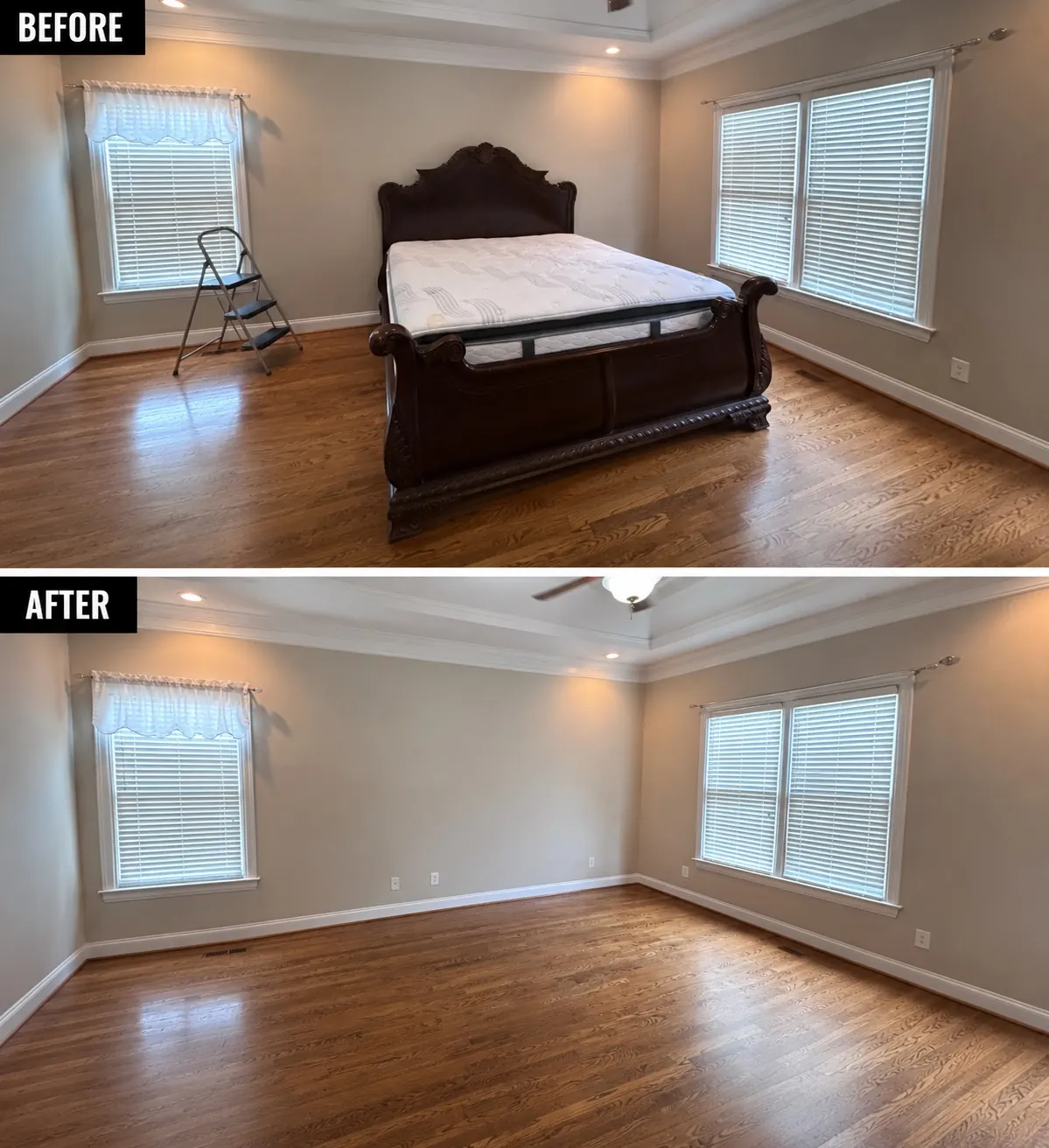
A closing date is approaching, relatives are coming into town, or an inherited house needs to be prepared for sale. That is usually when people ask, “How long does an estate cleanout take?” The honest answer is that it depends on the home, the amount of belongings, and how much sorting the family needs to do first. Still, most estate cleanouts have a predictable range once someone has seen the property.
For many homes in Canton, Cherokee County, and the surrounding Metro Atlanta area, a professional crew can clear a straightforward estate in one day. A fuller home, a larger property, or a situation involving family decisions may take two or more days. The goal should not be to rush meaningful decisions. It should be to keep the work organized so the property can move forward without creating more stress for the people involved.
How Long Does an Estate Cleanout Take? Typical Timelines
A small apartment, condo, or lightly furnished home can often be completed in a few hours to one full day. This assumes that family members have already removed personal keepsakes, paperwork, and items they plan to keep.
A typical three-bedroom house usually takes one to two days. The timeline can extend if the garage, attic, basement, sheds, or outdoor areas are full. Furniture removal takes time, especially when large pieces must be carried down stairs, through tight hallways, or from upper floors.
A large home packed with decades of belongings can require several days. That does not mean the job is unusually difficult. It means the crew needs enough time to sort items carefully, load safely, and separate reusable furniture and household goods from materials that need responsible disposal.
For Realtors, landlords, and property managers, the timeline is often driven by the next deadline. A home may need to be cleared before photographs, repairs, listing appointments, tenant turnover, or closing. In those cases, an on-site estimate helps establish a realistic schedule before the work begins.
What Makes an Estate Cleanout Take Longer?
The square footage of a home matters, but it is rarely the only factor. A smaller house filled from floor to ceiling can take longer than a larger home with only a few rooms of furniture.
The amount and location of belongings
The volume of items is the biggest factor. Full closets, crowded cabinets, heavy furniture, appliances, boxes, and garage contents all add loading time. Access also matters. A home with a long driveway, steep steps, a narrow stairwell, or limited parking may require more labor than a similar home with easy ground-level access.
Outbuildings are often overlooked during initial planning. Garages, storage rooms, sheds, crawl spaces, and workshops can hold years of accumulated items. Mentioning these spaces during the estimate prevents surprises and helps the crew arrive prepared.
Family sorting and decision-making
Estate cleanouts are personal. Families may need time to look through photo albums, documents, jewelry boxes, heirlooms, and sentimental belongings before removal begins. That is normal, and it is often the most important part of the process.
If possible, set aside a clear “keep” area before the cleanout. Use a spare room, a marked corner, or labeled boxes for items going to family members. This reduces last-minute questions and allows the removal crew to work steadily without accidentally taking something that should stay.
Donation and reuse opportunities
A thoughtful cleanout is not simply about getting everything out of the house. Usable furniture, decor, kitchen items, and household goods may be suitable for donation when practical. Trash Talkers follows a RESCUE. RECYCLE. REMOVE. approach, looking for opportunities to keep reusable items in use rather than treating every item as junk.
That process can add a little planning, but it often gives families peace of mind. Availability and condition matter, of course. Not every item can be donated, and some pieces may be too worn, damaged, or outdated for reuse. A professional crew can help identify what is likely to have a second life while keeping the cleanout moving.
Special handling needs
Heavy appliances, oversized furniture, pianos, and difficult-to-reach items can add time to the job. So can construction debris left after a repair project or property cleanup work around the exterior. A clear description and a few photos during the estimate process can help the crew plan the right equipment, team size, and loading approach.
A Simple Way to Keep the Cleanout on Schedule
You do not need to organize every drawer before calling for help. In fact, trying to do everything alone can turn a one-day removal job into weeks of stressful work. Instead, focus your time on the items only you or your family can identify.
Before the crew arrives, remove personal documents, medications, cash, valuables, family photographs, and anything promised to a relative. If there are items you are unsure about, place them in a separate area until a family member can review them. Then let the cleanout team handle the lifting, loading, furniture removal, and final sweep of the spaces included in the job.
It also helps to decide what “done” means for the property. Some clients need every room, closet, garage, and shed emptied. Others only need certain furniture removed so the home can be staged or repaired. Being specific about the desired result makes it easier to build a schedule that fits your deadline.
Can an Estate Cleanout Be Done in One Day?
Yes, many can. A one-day estate cleanout is most realistic when the home is moderately furnished, access is good, and the family has completed its keep-or-remove decisions. It is also helpful when the entire property can be addressed at once rather than waiting on decisions room by room.
A larger crew can complete more work in a day, but speed should never mean careless handling. The best approach balances efficiency with respect for the home and the belongings inside it. If the estate includes many sentimental items or several family members are involved, allowing an extra day may be the better choice.
For urgent real estate timelines, share the deadline early. A professional junk removal team can often recommend whether the work should be scheduled as one intensive cleanout or divided into stages. For example, the main living areas may need attention first for listing photos, while a garage or storage area can be completed afterward.
What Happens After the House Is Cleared?
After the belongings identified for removal are loaded, the crew should leave the included areas empty and ready for their next step. That may mean preparing for cleaning, repairs, painting, staging, a sale, or new occupants.
An estate cleanout is not the same as a deep house cleaning or renovation service. However, clearing the contents gives homeowners, executors, and real estate professionals a much clearer view of what the property needs next. It also removes the physical burden of moving heavy furniture and countless boxes during an already demanding time.
When to Request an Estimate
Request an estimate as soon as you know a cleanout may be needed, even if the exact date is still uncertain. An on-site visit or detailed review of the property can establish the likely timeline, identify access concerns, and clarify which areas are included. That information is especially useful when coordinating with relatives, attorneys, Realtors, contractors, or closing schedules.
If you are clearing an inherited home or preparing a property in Canton or Metro Atlanta, you do not have to carry the entire project yourself. A respectful cleanout plan gives your family room to make the decisions that matter while dependable professionals handle the removal. Contact Trash Talkers for a free, no-obligation estimate and a clear timeline for your property.