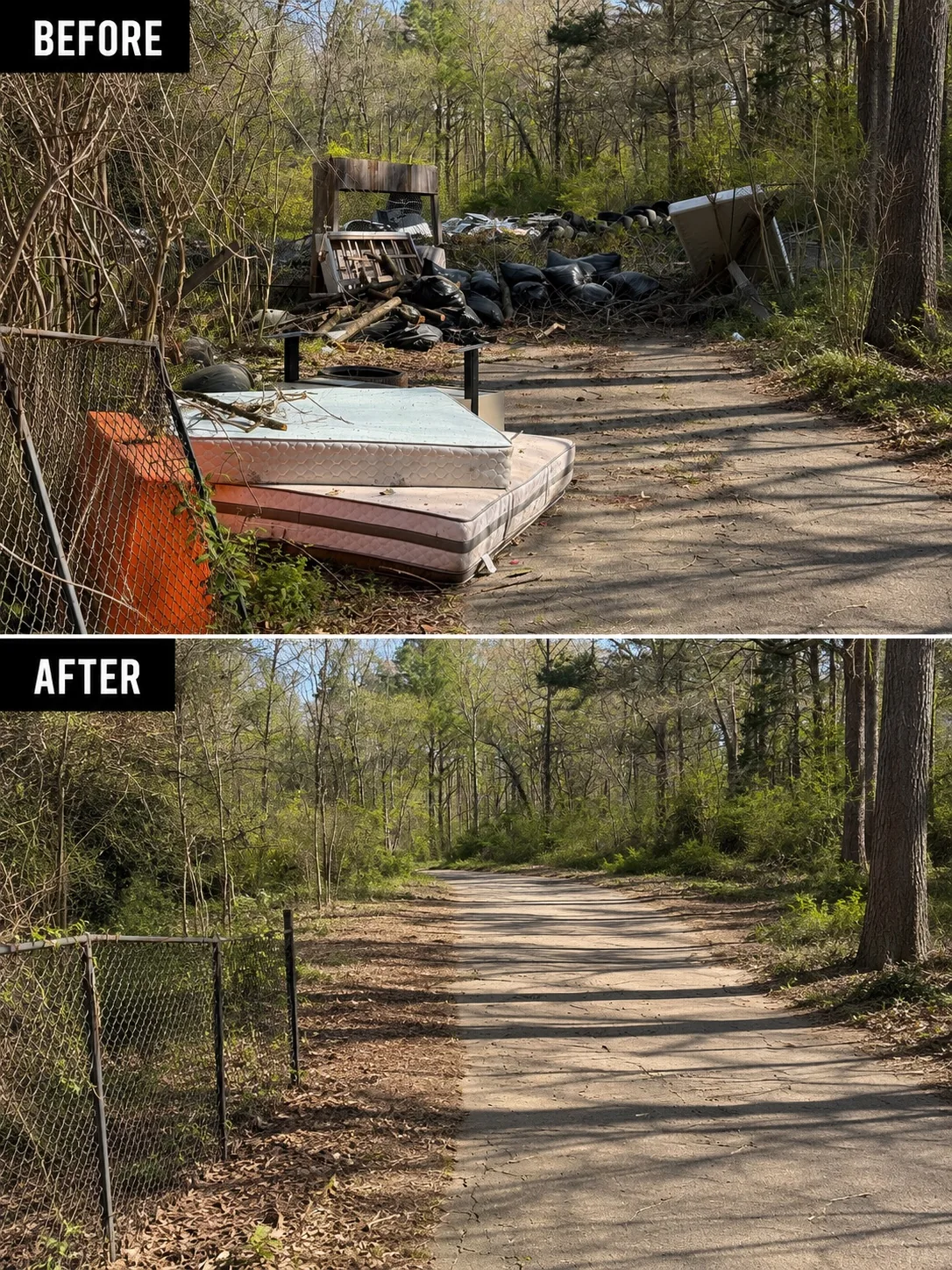
A vacant house is being prepared for sale. A rental has just been turned over. An inherited property has sat empty for a few weeks. Then someone leaves mattresses, old furniture, construction scraps, bags of household debris, or a trailer load of unwanted items near the curb, driveway, or back corner of the lot.
Illegal dumping on private property is more than an ugly inconvenience. It can delay a listing, complicate a tenant turnover, create safety concerns, and leave the owner with a cleanup problem they did not cause. For property owners in Canton, Cherokee County, and Metro Atlanta, the best response is usually quick documentation, the right report to local authorities, and professional removal once the scene is cleared for cleanup.
Why illegal dumping becomes a bigger property problem
Dumpers often target properties that look unoccupied: vacant homes, wooded lots, rental houses between tenants, foreclosures, and homes being handled by an executor. Unfortunately, waiting to deal with the mess can invite more dumping. One abandoned pile can signal that no one is watching the property.
The contents may also make a property look neglected to neighbors, prospective buyers, tenants, or code enforcement. A Realtor trying to schedule listing photos does not need a pile of broken furniture in the driveway. A landlord facing a tight turnover window cannot afford to lose days coordinating a cleanup. Families clearing an inherited home may already have enough decisions to make without sorting through items left by strangers.
There is also a practical distinction between abandoned belongings and illegal dumping. A former tenant may have left property behind after moving out, while a third party may have dumped debris onto the lot overnight. The cleanup can look similar, but the documentation, notice requirements, and responsibility may be different. When in doubt, avoid assuming and preserve the facts.
What to do after illegal dumping on private property
Start by treating the area as a documented property issue, not simply a pile that needs to disappear. Fast action matters, but so does protecting your ability to report what happened.
Take clear photos before anything is moved. Photograph the full pile from several angles, its location on the property, any tire tracks, identifying labels, vehicle parts, or other details that may help establish when and how the material arrived. Note the date and approximate time you found it.
Check available camera footage. Doorbell cameras, security cameras, neighboring businesses, and nearby homes may have captured a vehicle entering or leaving. Save the original footage promptly. Many systems overwrite recordings after a short period.
Report the incident through the appropriate local channel. Depending on the location and circumstances, that may mean local law enforcement, code enforcement, or another county or city office. If there is an immediate threat or suspicious activity in progress, use emergency services. For a non-emergency report, ask what information they need and keep the report number for your records.
Do not search through the pile or confront a suspected dumper. Property owners understandably want evidence, but handling unknown materials or approaching someone can create unnecessary risk. Let the relevant authorities advise you if they need access to the site before removal.
Arrange a prompt cleanup after documentation is complete. Removing the material quickly helps restore curb appeal, reduces the chance of repeat dumping, and gets the property back on schedule. A professional junk removal crew can load loose debris, bulky furniture, appliances, and general property clutter without turning a stressful situation into a bigger project.
If you have insurance coverage that may apply, contact your carrier or agent before disposing of documented evidence. Requirements vary by policy, so photos, reports, and invoices may be useful.
When the pile is part of a larger cleanout
Illegal dumping sometimes exposes a property issue that was already building. A garage may be packed with belongings from a previous owner. A rental may contain abandoned furniture from a tenant, plus debris placed outside later. An estate home may have legitimate household contents inside and unwanted items dumped near the shed.
Trying to separate every category on your own can slow down the property timeline. A professional crew can work with the owner, executor, Realtor, or property manager to identify what stays, what can be donated when appropriate, what can be recycled responsibly, and what needs to be removed. That approach is particularly helpful when a family is handling a loved one’s home and wants usable furniture or household items treated with care.
At Trash Talkers, the goal is simple: RESCUE. RECYCLE. REMOVE. Usable items are considered for donation whenever practical, while the remaining unwanted material is handled responsibly. That does not erase the frustration of someone dumping on your property, but it can make the cleanup portion easier and more respectful.
The difference between a quick pickup and a property cleanup
A single couch at the edge of a driveway may be a straightforward furniture removal job. A larger dump site can require more planning, especially when access is limited, items are spread across a yard, or the property is occupied. The right service depends on the volume, location, and condition of the material.
For example, a landlord may need a garage cleanout after a tenant leaves boxes, mattresses, and broken furnishings behind. A commercial property manager may need debris removed from behind a building before a new tenant takes possession. An executor may need a full property cleanup that includes exterior items as well as years of household contents inside the home.
Before requesting an estimate, it helps to take a few wide photos, identify where the crew can park, and mention any gates, steep driveways, stairs, or time-sensitive closing dates. You do not need to sort everything in advance. Clear information helps the crew bring the right labor and equipment and gives you a more accurate plan for the job.
Preventing repeat dumping at a vacant property
No prevention measure is perfect, but visible attention makes a property less appealing to people looking for an easy dumping spot. The best approach depends on the property’s layout, how long it will be vacant, and whether neighbors can see the entrances.
Keep gates closed and repair damaged fencing where practical. Remove existing piles quickly so the property does not appear abandoned. Trim back overgrowth that hides driveways or side entrances, and make sure the address is visible for visitors and responding officers. Cameras and motion lighting can help in areas with repeated problems, particularly near alleys, rear parking areas, or wooded access points.
For landlords and property managers, regular exterior checks between tenants are often worth the effort. For estate properties, designate one person who can monitor the home, collect mail, and respond if neighbors notice activity. A clean, maintained exterior protects the property’s value and sends a clear message that someone is paying attention.
Get the property back under control
You should not have to let someone else’s mess delay your sale, turnover, renovation, or family plans. Once you have documented the incident and completed any needed reporting, professional junk removal can clear the area and help you move forward.
For illegal dumping, abandoned furniture, garage clutter, rental turnover debris, or a larger estate property cleanup in Canton, Cherokee County, or Metro Atlanta, contact Trash Talkers for a free, no-obligation estimate. No job is too big or too small, and a clean property is one less problem standing between you and what comes next.