The work crew is gone, the paint is dry, and the room finally looks the way you wanted. Then you notice what is still left behind - busted drywall, trim scraps, old cabinets, tile pieces, cardboard, dust-covered packaging, and a pile in the driveway you do not want to deal with. That is where post renovation debris removal stops being an afterthought and starts being the last real step in finishing the job.
A renovation is not done when the contractor leaves. It is done when your space is clean, safe, and usable again. For homeowners and renters, that final cleanup can be more frustrating than expected because the debris is heavy, awkward, dirty, and often not accepted with regular curbside trash.
Why post renovation debris removal matters
Construction debris creates more than an eyesore. Sharp materials like broken tile, nails, glass, and splintered wood can turn a finished space into a hazard fast. Even lighter items like insulation scraps, empty buckets, and torn-up cardboard take up more room than most people expect.
There is also the issue of dust and hidden mess. Renovation debris has a way of spreading into hallways, garages, patios, and side yards. What looks like one manageable pile often includes several disposal categories, and each one may have different rules depending on your local service provider.
The biggest mistake people make is assuming they can chip away at it over a few weekends. Sometimes that works for a small bathroom refresh. More often, the debris sits longer than planned because life gets busy, the bags get too heavy, or the dump run keeps getting pushed back.
What usually gets left behind after a renovation
Every project creates a different mix of waste, but most cleanup jobs include a combination of bulky material, loose debris, and packaging. Drywall, lumber offcuts, flooring scraps, broken fixtures, old vanities, worn-out cabinets, and torn-out carpet are common. So are paint cans, empty adhesive containers, boxes from new appliances or lighting, and protective wrap from delivered materials.
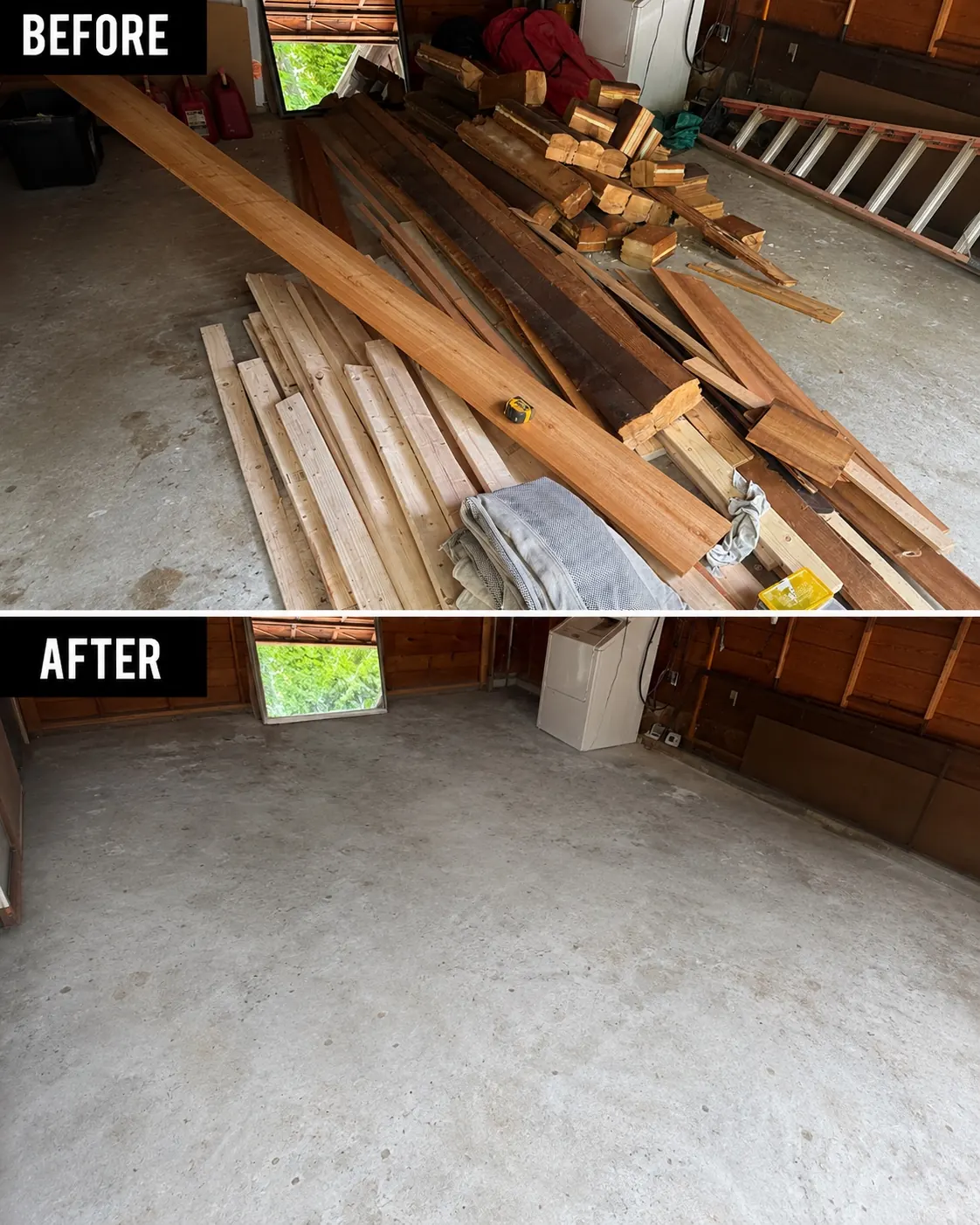
Small projects can still create a surprising mess. Replacing kitchen counters may leave behind sink cutouts, backsplash debris, old plumbing parts, and a mountain of packing material. A garage conversion may produce framing lumber, sheetrock waste, insulation, and old shelving that no longer fits the new layout.
That mix matters because not everything should be handled the same way. Some materials can be recycled. Some need special disposal. Some can be donated if they are still usable. And some are simply too heavy or dirty for regular trash pickup.
What you can toss, recycle, or donate
This is the part where it depends on the condition of the material and what your local area accepts. Clean cardboard, certain metals, and some appliances or fixtures may be recyclable. Usable cabinets, doors, hardware, and light fixtures may be worth donating if they are still in decent shape.
On the other hand, damaged drywall, broken tile, treated wood, and heavily soiled carpet usually head straight to disposal. Leftover paint, solvents, and certain adhesives may require special handling. If you are not sure, guessing can cost you time and leave you with rejected items at the landfill or curb.
A good removal team helps sort that out. Responsible hauling is not only about loading fast. It is also about separating what can be recycled when possible and disposing of the rest the right way.
DIY hauling versus hiring help
If you have a small amount of light debris and access to a truck, doing it yourself may make sense. A few bags of flooring scraps or flattened boxes from a minor update are manageable for many homeowners. If the materials are clean, easy to lift, and accepted by your local drop-off site, a DIY run can save money.
But post renovation debris removal gets harder the moment the load includes heavy or sharp material. Concrete chunks, old countertops, demolition lumber, and broken cabinets are not fun to move, and they can damage your vehicle if they are not loaded properly. You also have to think about lifting injuries, cleanup time, disposal fees, and the hassle of making multiple trips.
Hiring help usually makes more sense when the debris is bulky, mixed, or too much for one trip. It is also the better option if you want your space back quickly. A professional crew can load from inside the home, the garage, the backyard, or the curb, which saves time and keeps the project from dragging on.
When to schedule post renovation debris removal
The best time to schedule removal depends on the size of the project. For a full remodel, cleanup often works best in stages. One haul may happen after demolition, another near the end when packaging and leftover materials pile up, and a final pass once the work is complete.
For smaller projects, a single pickup after the renovation is usually enough. The key is not waiting until debris starts blocking walkways, driveways, or living space. Delays often make the mess feel bigger and more stressful than it needs to be.
If you are coordinating with contractors, ask them early what they will remove and what they will leave behind. Some crews handle basic cleanup but not full debris hauling. Others remove only what they tear out, not the pallets, boxes, old furniture, or extra junk already in the space.
What to expect from a professional removal service
A good junk removal service should make the process simple. You should be able to call, text, or email for a quote, explain what needs to go, and schedule a pickup without a lot of back and forth. Once the team arrives, they should handle the lifting, loading, and hauling so you do not have to.
That matters after a renovation because most customers are already tired of managing moving parts. You have likely been dealing with budgets, delays, deliveries, dust, and decisions for weeks. The last thing you want is one more complicated task.
Professional service also helps with the materials people forget about. Think old appliances pulled during a kitchen update, yard waste from exterior work, leftover fence panels, or bulky items that were moved out of the way and never returned. In many homes, renovation cleanup turns into a chance to clear out more than just construction debris.
Eco-friendly removal is worth asking about
Not all hauling is the same. Some companies compete on price alone and treat every load the same way. Others take a more responsible approach by recycling materials when possible and reducing what ends up in the landfill.
That can make a real difference after a renovation because these projects create a lot of reusable and recyclable waste. Metal fixtures, cardboard, wood, and certain appliances do not always need to be dumped. If responsible disposal matters to you, ask how materials are sorted and where they go.
For homeowners in Metro Atlanta, that question is especially practical because disposal rules and available facilities can vary by area. A local company that knows the process can save you from wasted trips and mixed-up loads.
How to make pickup faster and easier
You do not need to stage everything perfectly, but a little prep helps. If possible, separate clearly hazardous items like broken glass or exposed nails. Keep pathways open so the crew can move safely. If you know certain items are staying, point those out before loading starts.
It also helps to be clear about volume. Photos are often the fastest way to get an accurate quote, especially when the debris includes both renovation waste and household junk. A pile of tile scraps is priced differently from a mix of old cabinets, drywall, and a worn-out refrigerator.
If weather is a factor, do not wait too long. Rain can soak drywall, ruin cardboard, and make debris heavier and messier to remove. What was a quick job on Friday can become a muddy headache by Monday.
The real goal is getting your home back
Most people do not care about debris removal for its own sake. They care because they want the project to feel finished. They want to park in the garage again, walk through the new space safely, and stop looking at leftovers from a job they are ready to enjoy.
That is why fast, dependable cleanup matters. It closes the loop. It turns a construction zone back into a home.
If your renovation is done but the mess is not, take care of the debris before it steals more time and space than it should. A clean finish is not extra. It is part of the job.