An office can look functional right up until a lease deadline, relocation, renovation, or downsizing makes every unused desk and back-room box impossible to ignore. Office cleanout services give business owners, property managers, and commercial tenants a practical way to clear the space without pulling employees away from their actual work.
For businesses in Canton, Cherokee County, and Metro Atlanta, the goal is rarely just to get rid of stuff. The goal is to leave an office, retail back room, warehouse area, or professional suite clean, usable, and ready for its next purpose on a schedule that does not disrupt operations.
What an Office Cleanout Usually Includes
An office cleanout is more than carrying out a few chairs. It can involve clearing a full workspace after a move, removing old furniture during a remodel, emptying a tenant space after a closure, or handling years of accumulated items in storage rooms and break areas.
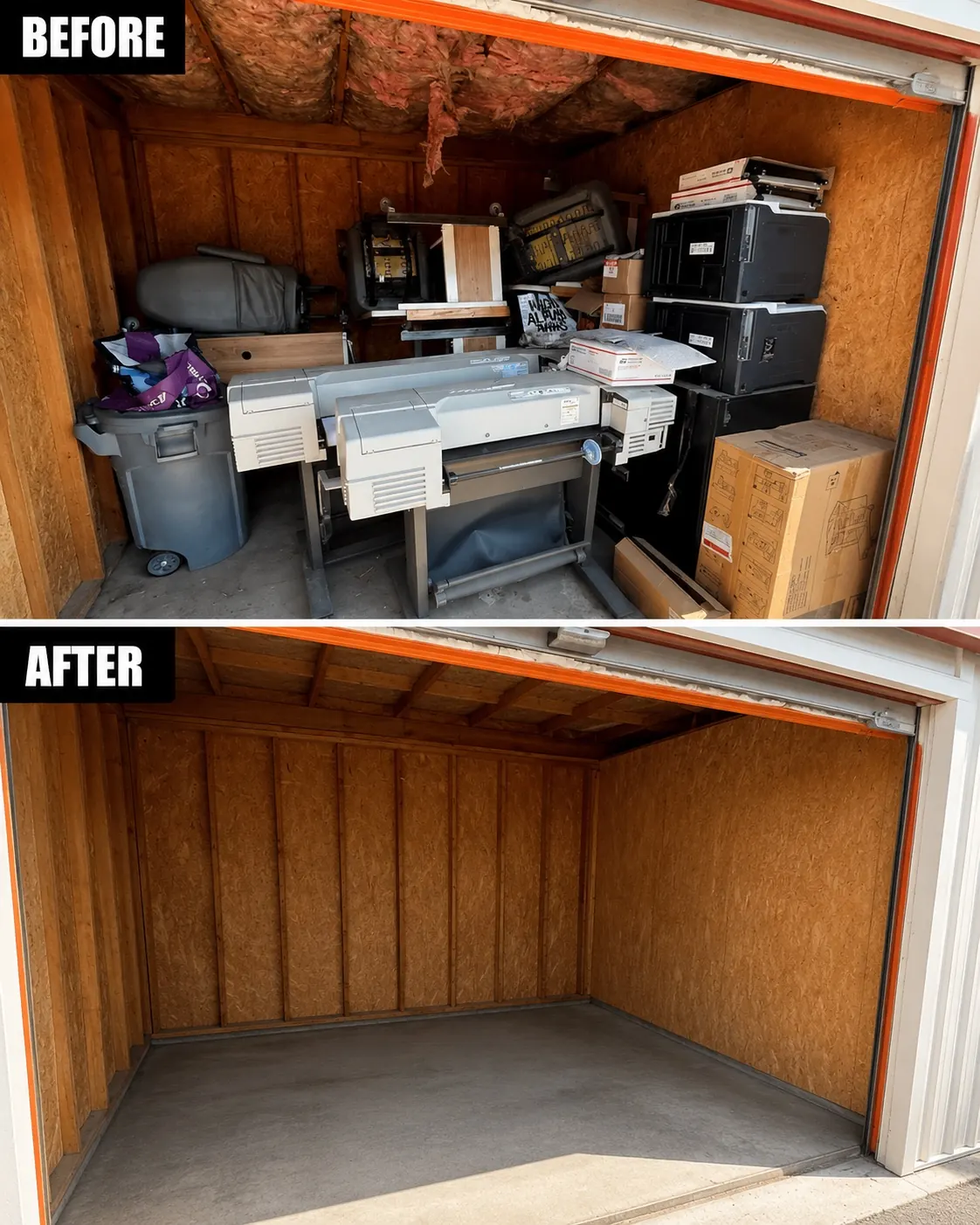
Common items include desks, office chairs, filing cabinets, cubicles, conference tables, shelving, break-room furniture, small appliances, boxed supplies, display fixtures, and general commercial clutter. Some jobs are straightforward single-room pickups. Others involve several suites, a storage unit, or a property that needs to be cleared before a handoff to a landlord, buyer, or contractor.
The right scope depends on the space. A law office with files and heavy wood furniture needs a different approach than a retail store clearing racks and fixtures. A property manager dealing with abandoned items after a tenant turnover may need fast scheduling and clear communication about what is being removed.
When Professional Office Cleanout Services Are Worth It
Professional removal makes the most sense when the volume, weight, timeline, or logistics exceed what an in-house team can reasonably manage. Asking staff to disassemble furniture, carry filing cabinets downstairs, and make repeated disposal runs often creates more disruption than expected. It can also turn a one-day office project into a week of unfinished work.
It is especially helpful when a commercial lease is ending. Many tenants discover late in the process that leftover furniture, storage-room contents, and old equipment still need to be removed before final walkthroughs. Getting the cleanout scheduled early leaves time for cleaning, repairs, and any work required by the lease.
Realtors, landlords, and property managers also benefit when a former business leaves behind furnishings or miscellaneous items. A cleared suite photographs better, is easier to show, and lets the next tenant or owner see the usable square footage. No job is too big or too small, but it helps to share the size of the space and the target completion date when requesting an estimate.
A Better Plan Than Clearing Everything at Once
Before removal begins, decide what needs to stay, what can be donated, and what should be removed. This step is easy to skip when a deadline is close, but it prevents expensive mistakes such as removing equipment that a team still needs or overlooking records that need to be retained.
Start with a walk-through involving the person who can make final decisions. Mark items that will remain in the space, identify anything employees may want to take, and separate confidential documents from ordinary office paper. If there are locked rooms, access codes, elevator reservations, loading-dock rules, or building move-out requirements, share those details ahead of time.
A short preparation list can keep cleanout day moving:
- Remove personal belongings, company records, keys, and anything containing sensitive information.
- Identify furniture or usable items that may be candidates for donation.
- Confirm building access, parking, elevator use, and the preferred loading route.
- Let the removal team know about oversized, unusually heavy, or hard-to-reach items.
You do not need to sort every paperclip or empty every desk drawer perfectly. The purpose is to make clear decisions about valuables, records, and items that should not leave the property. The removal crew can handle the lifting, loading, and bulk clearing.
What Happens to Usable Office Furniture?
One question business owners often ask is whether good furniture can be donated instead of discarded. The honest answer is that it depends on the item’s condition, cleanliness, age, and whether a local organization can accept it. Well-kept desks, chairs, tables, shelving, and other useful pieces may have a second life when practical.
That approach matters when an office is clearing out usable furnishings after a relocation or redesign. It can feel wasteful to remove a room full of functional furniture simply because it no longer fits the new layout. Trash Talkers Junk Removal follows a RESCUE. RECYCLE. REMOVE. approach, looking for sensible opportunities to donate reusable items and recycle materials when possible before removing what cannot be reused.
Not every item can be donated, and a cleanout timeline may affect available options. The priority is still completing the job reliably and leaving the space ready for its next step. A good provider will be straightforward about what can realistically be set aside for reuse rather than making promises that do not fit the condition or schedule of the project.
Scheduling Around Your Business and Building Rules
Office cleanouts are often time-sensitive, but speed should not mean confusion. Businesses may need work completed after hours, before a lease inspection, or between tenant occupancy periods. Buildings may require a certificate of insurance, designated loading times, elevator pads, or advance approval for large removals.
Share these requirements during the estimate process. A little planning helps avoid delays on cleanout day, particularly in multi-tenant buildings around Metro Atlanta where loading areas and elevators are shared. It also helps the crew arrive prepared with the right number of people and the right plan for navigating the space.
For active businesses, the least disruptive option may be to remove surplus items in phases. For example, a company can clear an old training room first, then schedule the main furniture removal after the new office setup is complete. That may take longer than a single cleanout, but it can be the better choice when employees are still working on site.
What Affects the Scope of an Office Cleanout?
The size of the office matters, but it is not the only factor. A compact suite packed with heavy furniture and storage boxes can require more labor than a larger, mostly empty workspace. Stairs, long carrying distances, tight hallways, parking limitations, and elevator access all affect the plan.
The type and condition of the contents matter, too. Loose clutter takes longer to gather than a row of matching desks. Furniture that needs to be disassembled may take additional time. If items are spread between offices, storage areas, and a separate property, the project needs a clear sequence so nothing gets missed.
This is why an accurate estimate starts with details. Photos can be helpful, but a walk-through may be the best option for larger commercial cleanouts. It gives everyone a chance to discuss access, timing, what stays, and what needs to go.
Leave the Space Ready for What Is Next
A completed office cleanout creates breathing room. It gives a business a clean reset after a move or closure, helps a landlord prepare for a new tenant, and lets a property manager turn attention to the next task instead of a room full of leftover furniture.
If your office, commercial suite, or storage area in Canton, Cherokee County, or the surrounding Metro Atlanta area needs to be cleared, contact Trash Talkers Junk Removal for a free, no-obligation estimate. Get your free quote today, make the decisions that only your business can make, and let a dependable crew handle the heavy lifting.